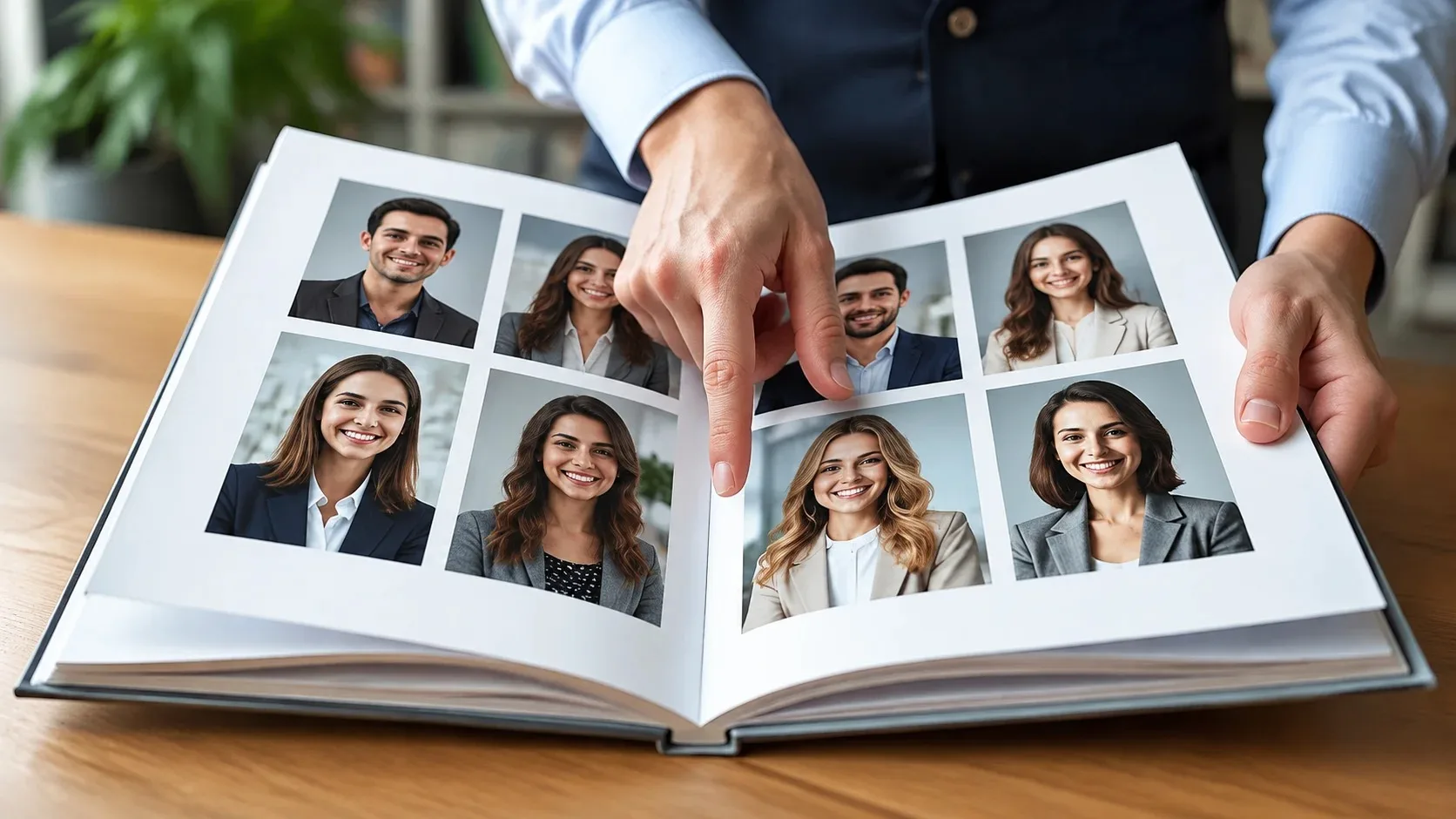
Portrait consistency is one of the most commercially sensitive tests an image model can face. A face that feels right in the first frame can soften, age, or rearrange its distinctive features once wardrobe, expression, or background begins to change. Clients rarely ask for a completely new person; they ask for the same person in a different shirt, with a softer expression, under new light, or against a new environment. Those requests sound modest. In practice they accumulate into measurable identity loss if the workflow does not actively protect likeness markers. I subjected Gemini Nano Banana 2.1 to a controlled portrait protocol that combined wardrobe shifts, expression requests, subtle age-related cues, and background changes—exactly the kinds of notes that arrive during campaign development. The goal was to map where likeness holds, where progressive drift turns a specific person into a related but different one, and where human restoration becomes the more efficient path.
Constructing the Portrait Identity Protocol
Defining the Locked Subject With Observable Markers
The subject was established with clear, observable markers that could be checked at a glance and at 100 percent zoom: overall face shape, approximate age range, a distinctive smile asymmetry, eyebrow density and arch, hair length and parting, skin tone, and a baseline wardrobe. These markers were written into every instruction as non-negotiable. Any frame that altered them failed the likeness check even if the new image felt more polished or emotionally on-target. The discipline of listing the markers before generation begins is the single highest-leverage habit in portrait continuity work. Without that list, evaluation drifts into subjective preference and progressive loss goes unnoticed until a client side-by-side reveals it.
Change Categories That Mirror Real Client Notes
Four categories of change were applied across a sequence of frames, first in isolation and then in combination:
Wardrobe (baseline linen shirt to light sweater to structured jacket)
Expression (neutral to slight smile to softened “approachable” request)
Background and lighting (interior window light to outdoor shade to evening practical light)
Subtle age or vitality cues introduced through soft client-style language such as “make her feel a touch more rested” or “give him a bit more lived-in character”
Each category was tested alone so its individual cost could be measured, then combined so cumulative load could be observed. This mirrors the way real revision rounds actually unfold: one note at a time until the notes begin to stack.
Evaluation Method and the Role of the Running Strip
Every new frame was placed in a running side-by-side strip with the locked hero portrait at matching scale. Likeness was scored on the locked markers rather than on overall aesthetic impression. Progressive softening that remained invisible in isolation became obvious in the strip. Thumbnail review and isolated evaluation are the two most common sources of false confidence in portrait work; the strip removes both.
Drift Patterns Across the Change Categories
Wardrobe Changes Were Relatively Stable When Protected
Shifting from the baseline linen shirt to a light sweater and then to a structured jacket preserved facial markers better than expected when protection language was explicit. Hair volume occasionally increased slightly to balance a new collar line, and shoulder line sometimes adjusted to accommodate fabric bulk, but face shape, smile asymmetry, and eyebrow character held in the early wardrobe frames. Wardrobe is currently one of the safer single-variable changes for portrait work, provided the instruction forbids any reinterpretation of the head and face. When the instruction is silent on facial protection, even a simple clothing change can trigger secondary adjustments that begin the softening process.
Expression Requests Introduced Earlier and More Visible Softening
Requests to soften expression or to make the subject “more approachable” produced plausible new emotional reads yet consistently reduced the distinctive smile asymmetry and slightly rounded jaw definition. These changes are easy to miss when the new expression feels emotionally successful. They are the beginning of identity loss when the campaign requires the same recognizable person across many frames. The commercial implication is clear: expression changes should be treated as higher-risk than wardrobe changes and should be sequenced carefully, with mandatory strip checks after every attempt.
Background and Lighting Shifts Compounded Micro-Errors
Moving the same subject from bright interior light to outdoor shade and then to evening practical light introduced small cumulative shifts in skin rendering, edge definition, and the relative contrast of facial features. By the time wardrobe and expression changes were also present, the strip revealed a progressive averaging of the original features. The subject still looked related; a strict likeness board would no longer pass the later frames without restoration. Lighting and background are not neutral containers. They actively interact with how likeness markers render, and that interaction must be monitored rather than assumed to be harmless.
Broad Language Remained the Highest-Risk Trigger
Any instruction that used atmospheric or emotional language without simultaneously restating the locked facial markers accelerated drift. “Make the portrait feel more intimate,” “give it a softer mood,” or “make the subject more approachable” reliably cost distinctive feature clarity. Concrete, protection-first language slowed the loss. The difference is large enough to treat broad aesthetic requests as a deliberate risk rather than a neutral creative option. When a client uses broad language, the practical response is to translate it into the narrowest possible concrete change and to restate the full marker list in the same instruction.
Instruction and QA Practices That Improved Survival
Protection-First Portrait Language as Standard Operating Procedure
Instructions that opened with the full marker list—“Keep exact face shape, smile asymmetry, eyebrow density, hair parting, and skin tone identical. Change only [variable]”—consistently outperformed instructions that led with the desired change. The model still made interpretive decisions, but the magnitude of drift decreased. Over multiple tests this opening block became a reusable template. Saving it as a studio standard reduces both prompting time and identity failures.
Sequential Rather Than Compound Changes
When multiple changes were required, they were applied one at a time and verified after each step. Compound requests that simultaneously altered wardrobe, expression, and background produced larger single-step losses and made it harder to identify which variable had caused the damage. Sequencing turned a high-risk jump into a series of measurable, correctable steps. The extra process time is recovered many times over in reduced rework and clearer client communication.
The Side-by-Side Strip as Non-Optional QA
Evaluating portraits in isolation is the most common source of false confidence. The running strip makes progressive loss visible while there is still time to restore or replace the frame. For any multi-frame portrait set, the strip is more valuable than any single generation parameter. It also serves as a shared reference when more than one person is evaluating the work, removing ambiguity about whether likeness has held.
Documenting the Exact Phrasing That Protected Markers
Every successful single-variable step was recorded with the precise instruction language that kept the markers intact. Over time that documentation becomes a practical portrait-continuity playbook rather than a collection of isolated wins. New team members can inherit the language instead of rediscovering the same failure points.
Commercial Implications for Portrait-Driven Campaigns
Reliable Range Under Current Behavior
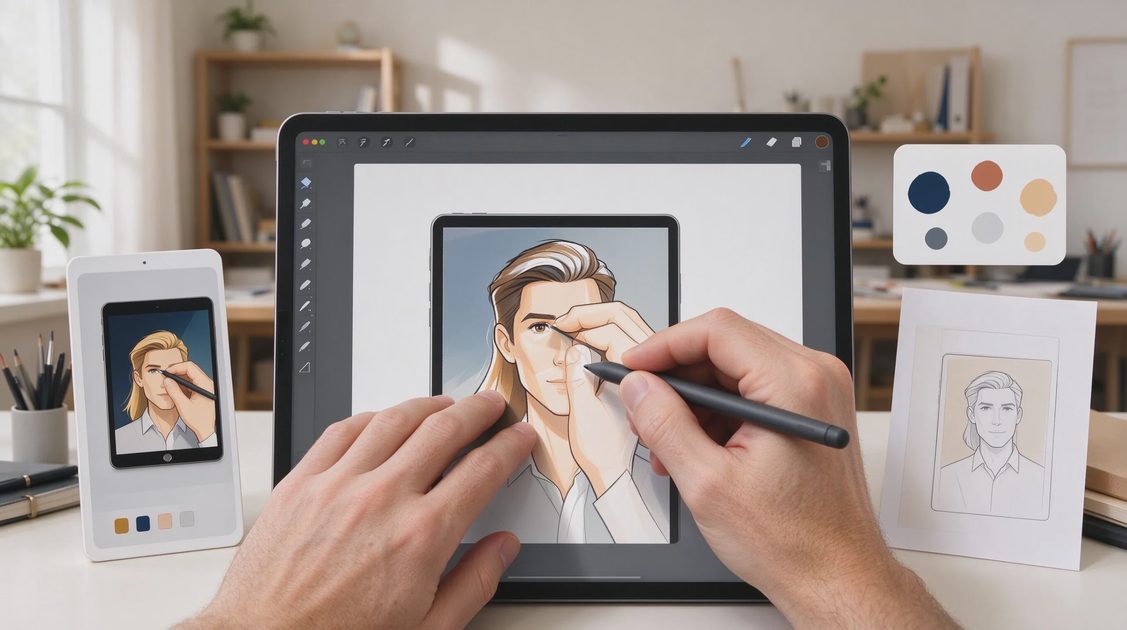
With careful prompting and continuous marker checks, two to four strong, likeness-consistent frames are realistically achievable before human restoration becomes the more efficient path. Campaigns that require a larger set should plan for design-tool or compositing intervention rather than expecting the model to hold perfect likeness across every revision. Treating four frames as a comfortable ceiling and anything beyond that as a signal to restore or regenerate under refreshed constraints prevents last-minute continuity crises.
When to Restore Rather Than Continue Generating
Once the strip shows clear softening of distinctive features, further generation often continues the averaging process. Restoring likeness by referencing the locked hero in a controlled editing or compositing environment is usually faster and more precise than asking the model to recover what has already drifted. The generation stage has already supplied lighting, wardrobe ideas, and environmental mood. The restoration stage supplies the facial fidelity the campaign requires.
Building a Portrait Continuity Kit for Repeated Use
Lock a high-quality hero portrait and extract five to seven visible markers.
Write those markers into every subsequent instruction as a reusable opening block.
Maintain a running side-by-side strip for the entire set.
Sequence wardrobe, expression, and background changes rather than combining them.
Treat the first clear marker loss as the signal to finish remaining frames with precision tools.
Record the exact instruction phrasing that successfully protected markers for future briefs.
Portrait consistency under wardrobe, expression, age-cue, and background pressure remains a stringent test. Gemini Nano Banana 2.1 can hold likeness longer under explicit protection language and disciplined QA than under casual prompting. It still accumulates identity drift when change categories multiply. The professional response is to treat likeness as a protected system that requires the same continuous attention a traditional continuity team would apply on a multi-day shoot. Pretty expressions are common. A recognizable person across the full set is the commercial standard that matters.
For AI tool features, rules and availability, refer to their official sites.


Leave your thoughts here, too.