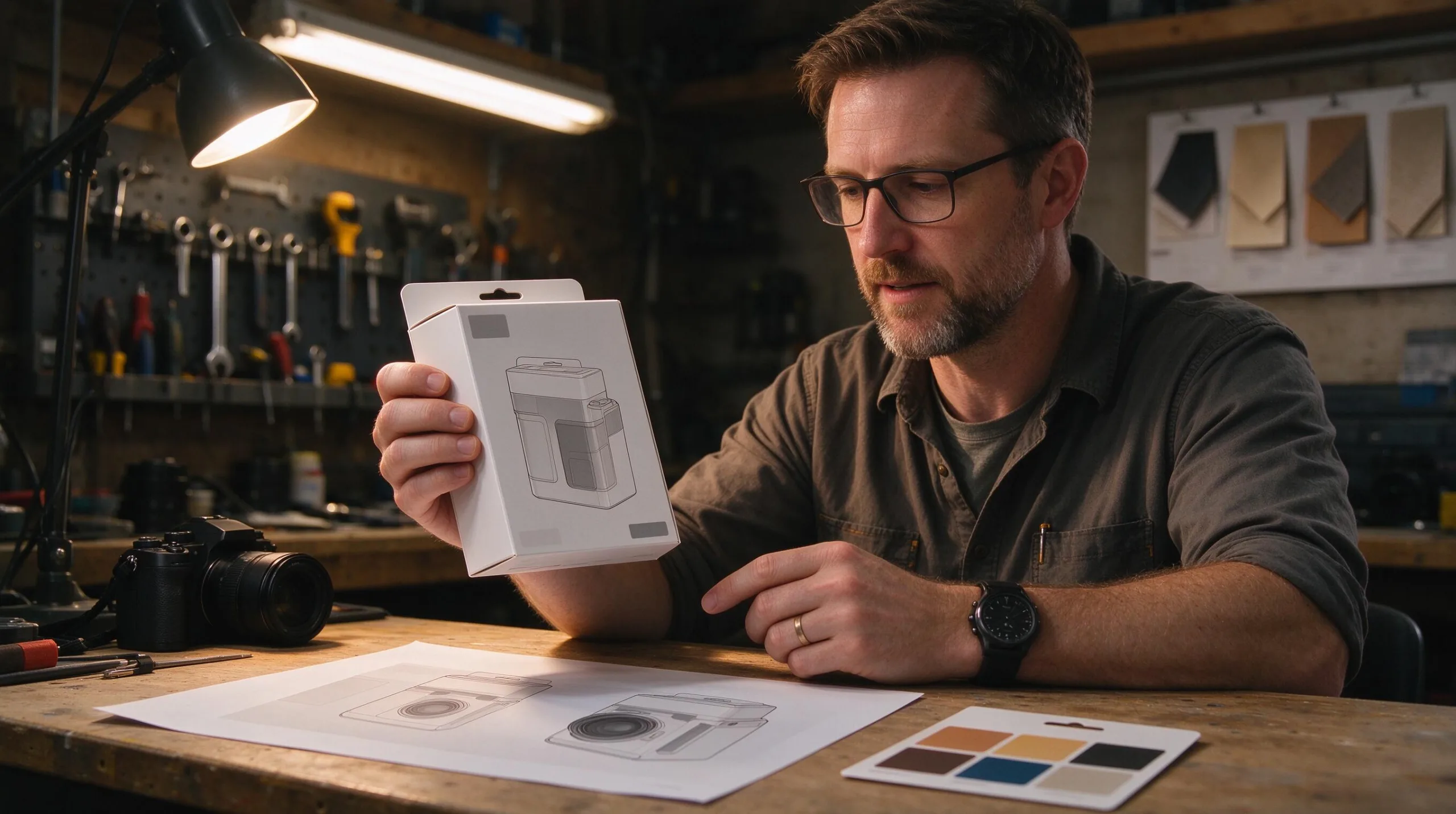
The most revealing commercial test is not the first generation. It is the sequence of notes that arrives after a client has already approved one frame and then asks for everything around it to move. “Keep the product exactly as it is. Change the surface, the light, the props, the crop, and the seasonal feeling.” That request is common, reasonable, and punishing for any system that cannot isolate variables while protecting identity. I ran that exact simulation with Gemini Nano Banana 2.1, starting from a locked, approved hero and applying a realistic cascade of environmental and contextual changes while treating the core subject as inviolable. The exercise maps both the current strengths of controlled editing and the hard limits that still require human restoration, and it supplies a repeatable protocol any team can adapt for their own revision rounds.

Establishing the Approved Hero and the Revision Cascade
The Locked Starting Point and Simulated First Approval
The hero was a product frame that had already survived identity QA and a simulated first-round approval. Geometry, material response, label hierarchy, and lighting were locked and duplicated. The client-style brief for the revision phase was written as: “We love the product and the overall feel of the hero. Now give us the same product on a different surface, with cooler light, one new supporting prop, a tighter vertical crop, and a light seasonal cue. Do not change the product itself in any way.” This language mirrors the way real notes arrive: positive affirmation of the core subject followed by a list of environmental moves.
Sequencing the Notes to Mirror Real Process
Rather than issuing one compound request, the notes were applied in the order a typical revision round might unfold: surface first, then light temperature, then prop, then crop, then seasonal cue. After each step the frame was checked against the locked hero on the full marker list. This sequencing mirrors better commercial practice and produces cleaner diagnostic data than a single overloaded instruction. It also trains the team to translate compound client language into manageable single-variable steps.
Success Criteria for Individual Steps and for the Full Cascade
An individual step succeeded only if the requested environmental change appeared and every product marker remained stable. The overall simulation succeeded only if the final frame could still sit beside the original hero and read as the same physical object under new conditions. Partial success was recorded when the change occurred but minor unintended shifts appeared that could be corrected locally. Failure was recorded when product identity drifted enough to require restoration or replacement.
Step-by-Step Results Under Cascading Pressure
Surface and Light Changes Held Within Acceptable Limits
The surface swap and the subsequent cooler-light request both held product geometry and material response within acceptable limits when protection language was strict. Minor reflected-light shifts appeared on curved surfaces and were noted for local correction in the design file. These two steps confirmed that narrow environmental variables remain among the more controllable operations and can be executed with relatively low identity risk when the instruction explicitly protects the core subject.
Prop Addition Introduced Scale-Compensation Tendencies
Adding a single non-competing prop introduced a small but visible tendency for the model to adjust product scale or position to maintain compositional balance. The prop itself appeared as requested; the product did not remain perfectly static. This behavior is manageable with design-tool finishing or careful re-instruction, but it demonstrates that even explicit “keep the product identical” language does not fully eliminate interpretive adjustments when new elements enter the frame.
Crop Requests Triggered Compositional Reinterpretation
The tighter vertical crop triggered the familiar pattern of compositional reinterpretation rather than a pure geometric reframe. Negative space shifted, and the relative placement of the product within the new frame required correction to match the intended platform safe zones. Exact pixel crops and margin compliance were therefore finished in layout tools. The generation stage supplied the correctly lit product; the design stage supplied delivery precision.
Seasonal Cue and the Cost of Cumulative Load
The final light seasonal cue, applied after the previous four changes, revealed the cost of accumulation. Markers that had survived individual steps showed mild progressive softening once the full cascade was complete. The product still looked related to the hero; a strict side-by-side no longer passed without restoration. Cumulative load, not any single request, was the primary source of drift. This is the central diagnostic finding of the simulation: identity risk compounds even when each individual step appears acceptable in isolation.
Lessons for Real Client Revision Rounds
Break Compound Notes Into Sequenced Single-Variable Steps
When a client asks for multiple environmental changes at once, translating the note into sequenced single-variable requests and verifying after each step materially improves identity survival. The extra process time is recovered in reduced rework and clearer internal communication about what has been tried and what remains.
Maintain the Running Strip Throughout the Entire Cascade
Evaluating only the latest frame against memory or against a single previous version hides progressive loss. Keeping the original approved hero visible in a continuous strip makes the cost of each new change visible while correction is still inexpensive. The strip also becomes a shared reference when more than one stakeholder evaluates the work.
Decide in Advance What “Identical” Means and Write It Down
Before the revision round begins, list the markers that must not move. Share that list with anyone who will generate, edit, or evaluate the frames. Ambiguity about what “keep the product the same” means is a common source of later disagreement and wasted cycles. A short written marker list removes that ambiguity.
Record the Exact Instruction Language That Protected Markers
Every successful single-variable step, together with the instruction language that kept the markers intact, should be recorded. Over multiple campaigns that documentation becomes a practical revision playbook rather than a collection of isolated wins. New team members can inherit the language instead of rediscovering failure points under deadline pressure.
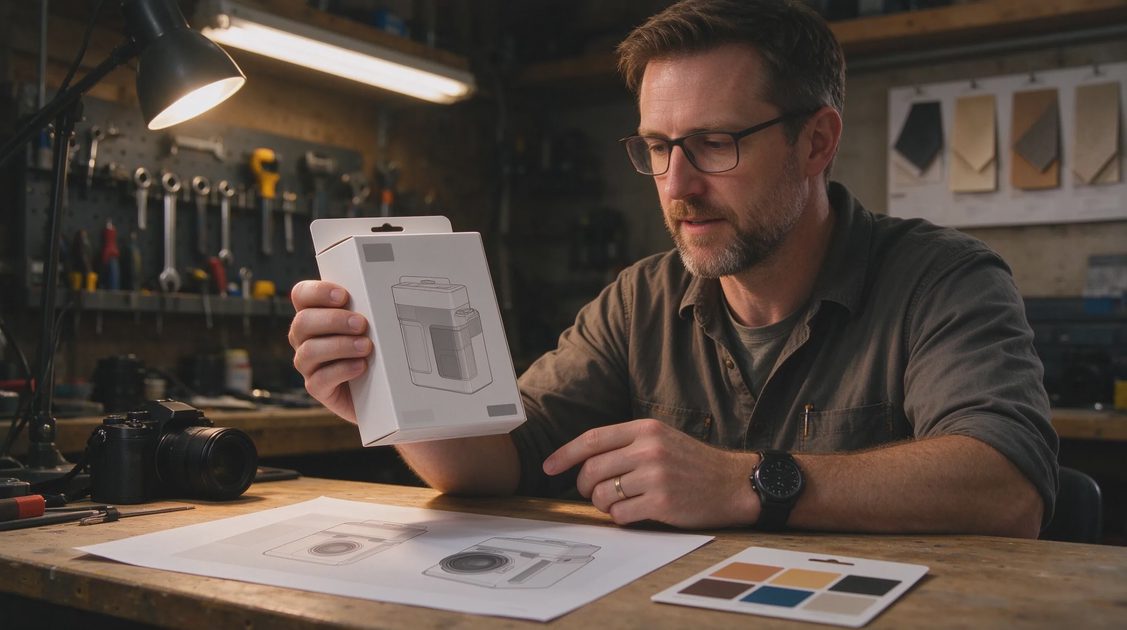
Production Response When Drift Appears Late in the Cascade
Restore From an Earlier Clean Step Rather Than Re-Generate at the End
Once cumulative softening is visible, additional generation cycles often continue the averaging process. Returning to an earlier, cleaner step in the sequence and finishing the remaining environmental changes in a design or compositing environment usually produces a more controllable result. The lighting and mood ideas already captured in the stronger intermediate frames can still be used; only the drifted geometry or material response needs restoration.
Set Client Expectations on Continuity Budget Early
A single locked hero can absorb a finite number of environmental changes before identity risk rises sharply. Communicating that budget early—five strong contextual variations are realistic under disciplined process; ten without restoration are not—prevents last-minute continuity crises and sets more accurate expectations about timeline and revision capacity.
Integrate the Simulation Protocol Into Standard Revision Practice
The sequence used here—lock hero, translate compound notes into single-variable steps, verify after each step against the original, restore when the strip shows drift—can be adopted as a studio standard for any revision-heavy project. It converts an unstructured client conversation into a measurable, documentable process.
The client revision simulation that keeps the first approved image and changes everything around it is one of the purest tests of commercial continuity. Gemini Nano Banana 2.1 can execute many of the individual environmental moves cleanly under strict protection language. It still accumulates drift when those moves are chained. The teams that ship coherent sets are the ones that sequence the notes, verify against the original hero after every step, restore when the strip demands it, and hand off the moment precision outweighs further generation. Pretty revisions are easy to request. Revisions that still look like the same approved object are the ones that survive the final review.
For AI tool features, rules and availability, refer to their official sites.
Leave your thoughts here, too.